Farmington Hills, MI · Garage Door Service
What a Service Call Actually Covers Here
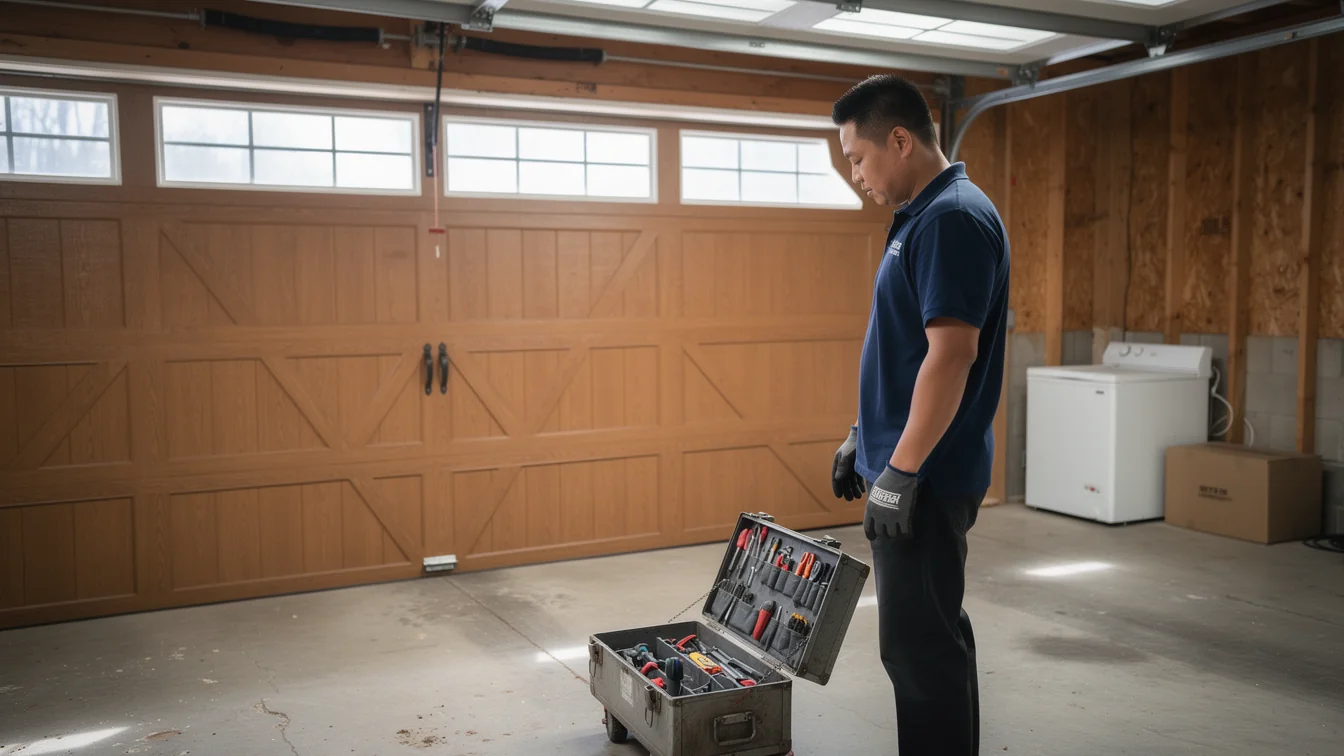
A look at what our techs actually check on a service call in Farmington Hills, where most houses date to 1960 and winters run cold and severe.
- Repairs & new doors
- Springs & openers
- Serving 5 nearby communities
What the Weather Here Does to It
Farmington Hills sits in a cold-severe climate band, and that matters more to a garage door than most people think. Steel contracts hard in a sustained freeze, and the grease in an old bearing or roller stiffens up right when the spring is under the most load - first cold snap of the season. On a door installed when the house was built, somewhere between 1938 and 1991 for most of this area, that combination of age and cold is exactly when a torsion spring lets go or a cable starts to fray at the drum. We're not treating this as a one-time repair town. A service call here means checking how the hardware has actually held up against seasonal swings, not just whether the door opens today. Rollers that were fine in August can bind in January. Weatherstripping that sealed in summer shrinks and pulls away from the slab once temperatures drop, letting cold air and road salt spray into the track area. None of this is dramatic - it's slow wear that cold weather exposes faster than a mild climate would. That's the lens we bring to every call: not just the symptom you noticed, but what the cold is doing underneath it.
Leaving It Alone
A lot of doors in this area are original or close to it, dating to that 1960s-70s stock across the named neighborhoods we cover. Leaving a door alone for years isn't automatically a mistake - plenty of these doors run fine with nothing but the original hardware if nobody's overloaded the springs or ignored a frayed cable. The honest limitation here: we don't push replacement on a door that's still sound just because it's old. If the panel is straight, the springs are rated for the door's weight, and the opener still has a working safety reverse, there's no service reason to touch it. Where leaving it alone becomes a problem is when a door from that same 1960-median era has never had the torsion spring tension checked, or the cable drums have never been inspected for wear grooves. Those parts don't announce themselves until they fail, usually on the coldest morning of the year, with the car trapped inside or outside the bay. We'd rather look at a 60-year-old door once a year than get the call after the cable snaps.
The Situation
Most service calls we run start with a door that's noisy, slow, or stuck halfway - not a door that's dead. On houses built mid-century through the early 90s, the usual pattern is original torsion hardware paired with a newer opener that was bolted on sometime later. That mismatch is its own category of trouble: an opener strong enough to force a door past a bad spring or a bent track, which hides the real problem until something snaps. A service call means we trace the actual cause, not just reset the opener and leave. We check spring balance by hand, look at cable wear at the drum, check the track alignment against the rollers, and test the auto-reverse safety function. On a door this old, in a climate this cold, we're also checking whether the bottom seal has hardened to the point it's letting cold air and moisture into the track channel - common on houses from the 1960s original-door era.
Where People Go Wrong
The mistake we see most is calling for a new opener when the real problem is a spring that's lost tension, which forces the existing opener to work harder than it was built for - burning out the motor faster. On a $78,727 median income block, that's an expensive way to solve a $200 problem. The other mistake is waiting until a cable actually snaps instead of calling when the door starts sagging unevenly on one side, which is the tell that a cable is fraying at the drum, not a sign to just lubricate and hope. With roughly 150,321 owner-occupied houses across this service area, most built well before modern door hardware existed, we see the same handful of failure patterns repeat house after house. Fixing the symptom instead of the cause is the single most common reason people end up calling twice for what should have been one job.
Frequently asked questions
How often should a garage door this old get checked?
If your house dates to the 1960s like most of this area, we'd check spring tension and cable condition once a year, ideally before the first hard freeze. Cold weather is when worn hardware fails, so catching a fraying cable or a weak spring in fall beats a stuck door in January.
Will you tell me if my door doesn't need work?
Yes. Plenty of original doors from this area are still structurally sound. If the springs, cables, and track check out, we'll say so rather than sell you a repair you don't need. We only recommend work tied to something we actually found on the door.
Does the cold really affect an old garage door that much?
In a severe cold climate like this one, yes. Metal contracts, grease stiffens, and seals shrink right as load on the springs peaks in winter. Doors that run fine all summer are far more likely to show a failure the first hard freeze of the season.
Related garage door services in Farmington Hills
More garage door guides
Book garage door service in Farmington Hills
Call now or request a quote - tell us what the door is doing and where you are.