
Farmington Hills, MI · Garage Door Service
Why Older Garage Doors Here Let the Cold In
How Farmington Hills' 1960s-era garage doors lose their seal in a cold-severe climate, and what actually stops the draft before winter sets in.
- Repairs & new doors
- Springs & openers
- Serving 5 nearby communities
What the Weather Here Does to It
Most houses in this part of southeast Michigan went up between 1938 and 1991, with the median build year sitting around 1960. That matters because the garage doors on those houses were never built for the cold-severe climate band this area sits in. Rubber and vinyl seals from that era weren't engineered for decades of freeze-thaw cycling, and even replacement seals installed ten or fifteen years ago are reaching the point where the material has gone stiff and glassy instead of soft and pliable.
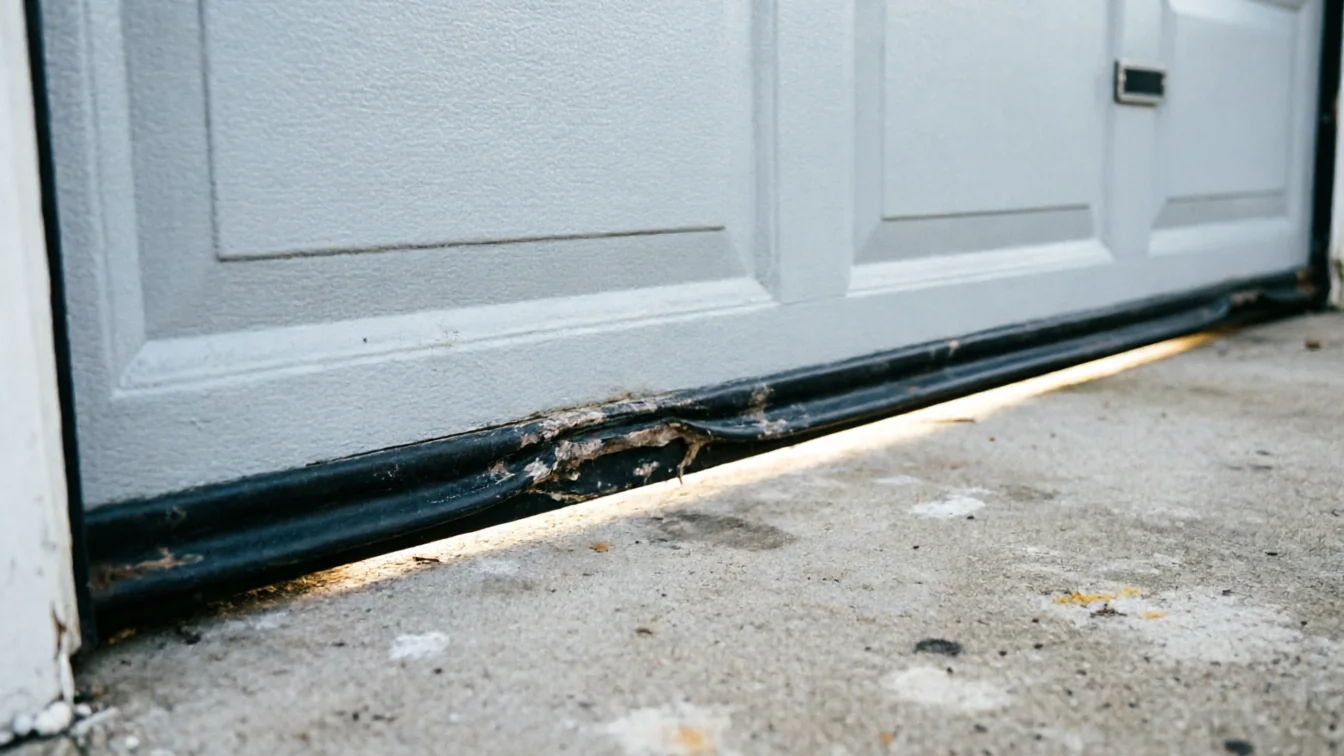
A seal that's lost its flex doesn't flex when the door closes on a cold night. It just sits there, cracked at the corners, letting air straight through the gap. On a 1960s-stock garage, that gap usually isn't one spot - it's the bottom astragal, the two side jambs, and the top header seal all going at once, because they were installed the same year and they're aging the same way. You feel it as a cold floor near the garage wall and a door that rattles slightly in the wind instead of sitting flush. That's not the door failing. That's the seal doing exactly what forty-plus-year-old rubber does in a climate that swings hard below freezing.
Leaving It Alone
A drafty seal doesn't stay a small problem. In a severe-cold climate, moisture that gets past a cracked bottom seal sits on the garage floor and refreezes overnight, and that ice works its way under the door edge, which then tears the seal further the next time the door cycles. Give it a winter or two of that and the seal isn't repairable - it has to come off in pieces.
There's also the opener to think about. A door that isn't sealing square is a door that's binding slightly on one side, and an opener motor that fights a bind every single cycle wears out its gears faster than one lifting a door that closes clean. On the housing stock common across this area - built well before openers were standard equipment, then retrofitted later - that mismatch between an older door and a newer motor is already a weak point. Adding a sealing problem on top of it shortens the life of both.
The honest version: a draft by itself won't wreck your door in one season. It's the combination of ice, repeated flexing on a cracked seal, and a motor straining against the bind that adds up. None of it happens fast. All of it happens.
The Situation
Across the 41 named areas this service area covers, the garage door stock is overwhelmingly 1960s and 1970s vintage, and that's the group showing up most often with seal failure now. Doors from that era typically used a simpler bottom seal profile than what's sold today, so when a seal does get replaced, the retainer track sometimes doesn't match current stock sizes without an adapter - something worth knowing before you order the wrong part twice.
What we see on these jobs: the bottom seal is almost always the first to go, since it takes the most direct weather and the most physical wear from the door closing on it thousands of times. The side seals go next, usually on the side that takes the prevailing wind. The top header seal is the one people forget to check, because you can't see it without looking up at the door from inside with the lights off - and it's often the one letting the most cold air through, since it runs the full width of the opening with no give built into most installs from that period.
Where People Go Wrong
The most common mistake is buying a seal by length instead of by profile. A bottom seal that's the right number of feet but the wrong retainer shape will sit loose in the track and still let air through, even though it looks installed correctly from the driveway.
Second mistake: sealing the bottom and stopping there. On a lot of the older housing stock in this area, the header seal is original and brittle, and it's doing more of the leaking than the bottom ever was. If you only replace what you can reach standing in the driveway, you've fixed the easy third of the problem.
Third, and this is the one we'll say plainly - sometimes the seal isn't the real issue. If the door itself has racked out of square over the decades, no amount of new weatherstripping closes that gap, because the gap isn't uniform anymore. In that case the fix is realigning the track and hinges, not another tube of seal. We'll tell you which one you've got before we sell you a part you don't need.
Frequently asked questions
How often do garage door seals need replacing in this climate?
There's no fixed interval we can give you without seeing the seal, but original or decades-old seals on the 1960s-70s housing stock common here are usually well past useful life once they've gone stiff or cracked at the corners. Once rubber loses flex in a cold-severe climate, it doesn't recover - it needs replacing, not patching.
Why does cold air still come in after I replaced the bottom seal?
The bottom seal is only one of four seal points - two side jambs and a top header seal also need checking. On older installs across this area, the header seal is original and often the biggest gap, but it's the one people never look at because you have to check it from inside with the door closed.
Can a seal problem actually damage my opener?
Indirectly, yes. A door that isn't sealing square is often binding slightly, and an opener motor that fights a bind on every cycle wears its gears down faster. It's not immediate, but over a season or two it shortens the motor's life, especially on older doors paired with newer openers.
Related garage door services in Farmington Hills
More garage door guides
Book garage door service in Farmington Hills
Call now or request a quote - tell us what the door is doing and where you are.