Farmington Hills, MI · Garage Door Service
Garage Door Installation for Farmington Hills Homes
Garage door installation for Farmington Hills homes built 1938-1991, matched to original openings and sized for Michigan's cold-climate stress on tracks and springs.
- Repairs & new doors
- Springs & openers
- Serving 5 nearby communities
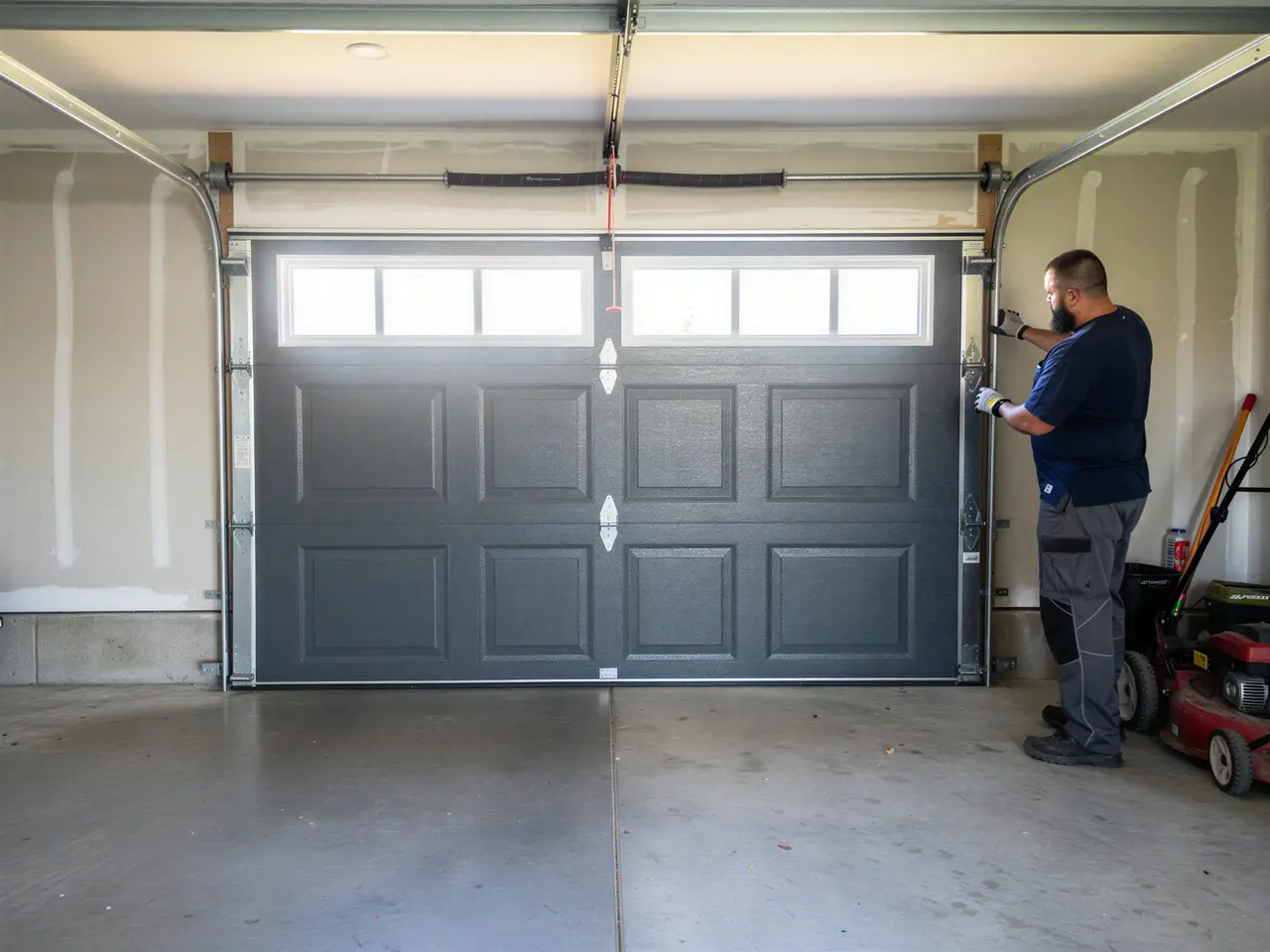
What You Are Seeing
If you're searching for installation instead of repair, you've probably already found the limit of what a repair can fix. A lot of what we see on service calls around here is a single-layer steel door from the original build, still hanging on the same track it came with. No foam core, no thermal break, just a skin of steel that transmits cold straight into the garage and whatever room sits over or next to it.
Signs the door itself is done, not just a part: the panels flex visibly when the door moves, there's daylight showing between sections when it's closed, the bottom seal has compressed flat and won't hold a bead against the slab, or the opener strains on every cycle because the door has gotten heavier with moisture over the decades. None of that is a spring problem or a sensor problem. That's a door that's outlived its hardware.
We also see openers paired with doors they were never sized for - a heavier insulated replacement bolted to a track built for the lighter original, which just moves the failure point from the door to the opener. If you're replacing the door, it's worth asking whether the opener should come with it.
Booking a Visit
We schedule installation visits across Farmington Hills and the surrounding area - Franklin and Bingham Farms are both inside a 10-minute run from most jobs, with Walled Lake, Northville, Orchard Lake Village, Wolverine Lake, and Beverly Hills a short drive past that. Knowing roughly where you sit relative to those towns helps us give you a realistic window instead of a vague one.
A first visit is measurement and a walk-through of the opening: width, height, headroom for the track type, and whether the framing is square enough for a standard install or needs shimming. We talk through door styles and insulation levels at that point, not before, because the right door depends on what your opening and your current track actually allow.
One honest limit: fully custom sizes or special order colors can carry lead times outside our control, since those come from the manufacturer, not off our truck. We'll tell you a realistic number once we know the order, not before.
What the Repair Takes
Installation means the old door and track come out, the opening gets checked for square, and new track, rollers, and springs go in sized to the new door's actual weight - an insulated door typically runs heavier than the single-layer steel it's replacing, which changes the spring calibration, not just the door.
For homes in this area, we're often working with openings framed to older dimensional lumber sizing, so headroom and side room can be tighter than a new-construction opening. That affects which track type fits and whether the opener needs to be relocated or just rehung.
A full install, once the door is on site, typically runs a few hours door to door - longer if the opening needs framing correction or the old track was fastened in ways that don't match current hardware. We test balance, travel limits, and auto-reverse before we leave, and we won't leave a door that doesn't balance correctly on its own springs, because an unbalanced door wears out its opener fast.
Why It Happens Here
Housing in this service area was mostly built between 1938 and 1991, with the median sitting around 1960, and that generation of garage doors was built for a different era of expectation - single steel skin, no insulation, hardware sized to a lighter door and a milder duty cycle than a Michigan winter actually delivers. This area sits in a cold climate band with severe conditions, and a 60-year-old door and track were never engineered for the number of freeze-thaw cycles they've now been through.
Cold doesn't just make steel brittle. It tightens tolerances - a track that was a sixteenth of an inch out of plumb in July can bind hard in January once everything contracts. On original 1960s-era doors, that binding shows up as a door that won't seat the last two inches, or a spring that snaps under a cold-morning cycle it would have handled fine in August.
With roughly 150,321 owner-occupied houses across this broader service area, a large share of them from that same build era, this isn't a one-house problem. It's a housing-stock problem, and it's why installation, not another round of parts, is often the honest answer once a door gets past a certain age.
Frequently asked questions
How do I know if I need a new door instead of a repair?
If the panels flex when the door moves, the seal no longer compresses flat against the slab, or the opener strains on every cycle even after a tune-up, the door itself has reached the end of its service life. A spring or roller swap won't fix a warped or under-insulated panel.
Will a new insulated door need a new opener too?
Often yes. Insulated doors run heavier than the original single-layer steel common on homes built here through the 1960s and 70s, and an opener sized for the lighter original can strain or fail early if it's left in place. We check the match during the measurement visit.
How long does a full installation take?
Once the door is on site, a typical install runs a few hours. Custom sizes or special-order colors add manufacturer lead time outside our control, which we'll give you a real number on once the order is placed.
Does cold weather affect the installation itself?
It affects timing more than the work. We still do the install, but severe cold tightens tolerances on track and framing, so we build in a little more adjustment time on winter jobs than we would in warmer months.
Book garage door service in Farmington Hills
Call now or request a quote - tell us what the door is doing and where you are.