
Farmington Hills, MI · Garage Door Service
Is Your Old Garage Door Worth Fixing or Should It Go
Many Farmington Hills homes date to the 1960s, built for milder winters than this area now gets. Here's how to judge if your old door still has life left.
- Repairs & new doors
- Springs & openers
- Serving 5 nearby communities
What the Weather Here Does to It
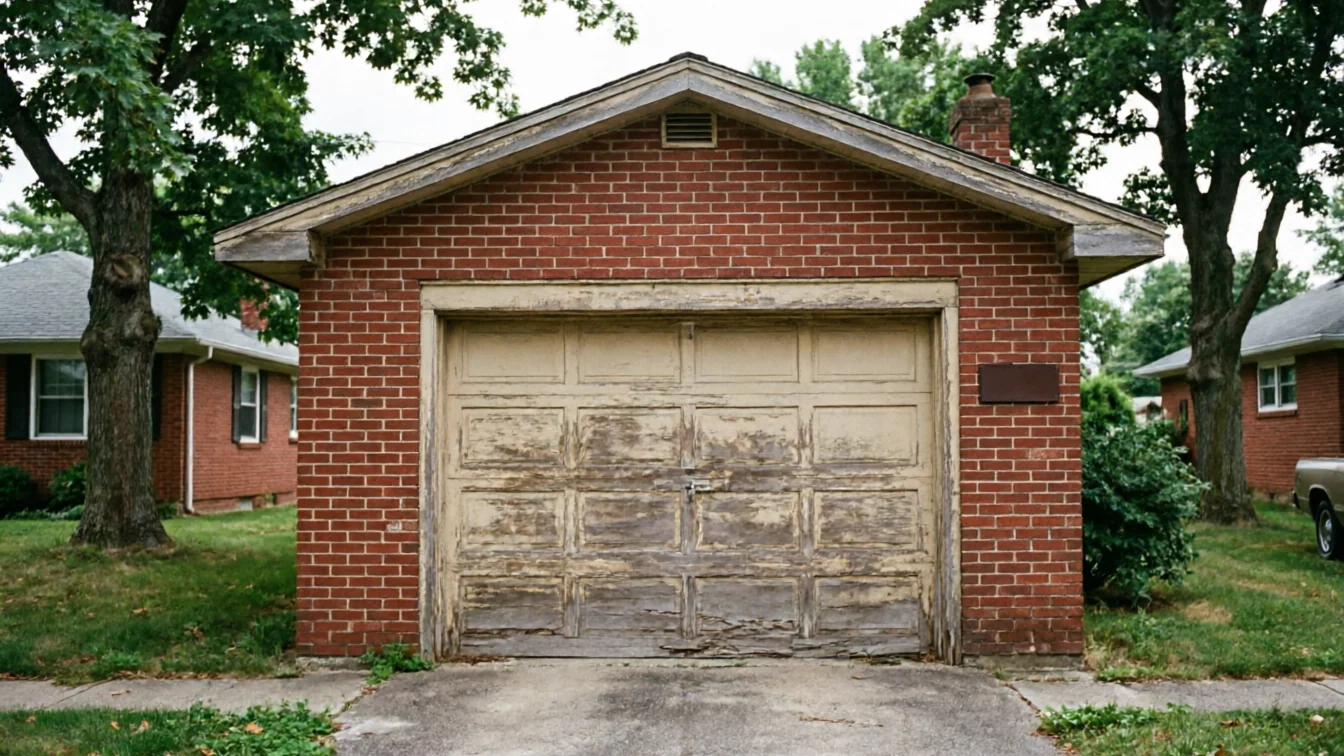
This area sits in a cold-climate band rated severe, and that matters more than most owners realize when a door is pushing fifty years old. A lot of the housing stock here went up between 1938 and 1991, with the median landing around 1960 - right when steel doors were simple, uninsulated, and never built with a thermal break. Decades of hard freeze-thaw swings work on that steel. The bottom seal hardens and cracks first. Panels that flexed fine in July go brittle and oil-can in January, and the track, which was leveled for a house that's now sixty-plus years old and has settled, starts binding right when the cold makes the steel stiffest. None of this is dramatic. It shows up as a door that groans going up, hangs on one corner, or needs a shove to seat at the bottom. On a newer door that's a lube job. On a door from that original 1960s build era, it's often the spring and track system telling you it's done absorbing that kind of seasonal swing. The fix is almost never the whole door - it's catching the hardware failure before the opener burns out trying to force a door that's binding.
Leaving It Alone
A torsion spring is rated for a number of open-close cycles, not for years, but on a door installed when the house was built in the 1960s or 70s, the two numbers usually run out around the same time. Leave a worn spring alone and it doesn't fail gently - it lets go, and whatever is under the door (a cable, your hand, the opener's gears) takes the load it was carrying. Rust on original hardware is the other slow failure here. Cold-climate humidity gets into the coil and the hinges over fifty-plus years, and a spring that's pitted with rust loses tension unevenly, which is why a door that's been ignored tends to run crooked before it quits outright. We won't tell you every squeak means imminent collapse - most don't. But a door running on its original 1960s-era torsion spring and track, in a climate band rated severe, is not a maintenance item you want to keep deferring. The honest version: once a spring is original to a house this old, it's not a question of if, it's a question of which week.
The Situation
With a median household income of $78,727 across this area, most owners here can cover a spring and track repair without needing to finance a full door replacement, and that's the math worth doing before you assume the whole unit is shot. Across this service area there are roughly 150,321 owner-occupied houses, and a large share of them still run the torsion spring and track hardware installed when the house went up - meaning the door opener may be newer, bolted onto original hardware from the 1960s build era. That combination is common and it's fixable. What tips a door from "worth fixing" to "replace it" is usually the panel, not the spring: steel that's rusted through at the bottom or a wood-composite door with delaminated layers from decades of freeze-thaw cycling can't be patched back to square. Spring, cable, roller, and track wear on an otherwise straight door is a repair. A warped or rotted panel on a severe-climate door is not - the shell itself has to go even if the opener is fine.
Where People Go Wrong
The most common mistake we see is an owner replacing a whole door because one spring broke, when the panels and track from that 1960s-era install were still straight and sound. The spring is the cheap part to replace; throwing out a structurally fine door because of it wastes money. The opposite mistake happens too - patching a door whose panels are already rusted through or whose wood composite has swollen and split from fifty-plus winters, because the opener still runs and the owner assumes that means the door is fine. An opener running smoothly tells you nothing about the steel underneath it. We'll say plainly where our own limit is: if the panel section is rotted or rusted past the surface, we're not going to spend your money patching it, because it won't hold up through another severe winter here, and that's not a repair we'd stand behind. The judgment call is panel condition first, spring and track condition second - not the other way around, and not based on age alone.
Frequently asked questions
My garage door is from when the house was built in the 1960s - is it too old to fix?
Age alone doesn't decide it. If the panels are straight and not rusted through, the spring and track can usually be replaced without touching the door itself. We look at the steel or wood composite first - that's what tells you whether it's a repair or a replacement.
Why does my door get harder to open in winter?
This area's cold-climate band is rated severe, and older steel doors without a thermal break stiffen and the seals harden in low temperatures. A track that's slightly out of level, which is common in houses from the 1960s build era, binds worse once the steel contracts in the cold.
Is it cheaper to fix the spring or replace the whole door?
Almost always cheaper to replace the spring, assuming the panels and track are sound. A full door makes sense when the steel or composite shell itself is rusted through or delaminated - at that point you'd be paying to fix a shell that won't hold up another winter anyway.
Related garage door services in Farmington Hills
More garage door guides
Book garage door service in Farmington Hills
Call now or request a quote - tell us what the door is doing and where you are.