Farmington Hills, MI · Garage Door Service
What We Check First on a Farmington Hills Service Call
Farmington Hills homes mostly date from the 1960s and 70s, and severe cold winters wear out old springs and tracks - here's what gets checked first on every call.
- Repairs & new doors
- Springs & openers
- Serving 5 nearby communities
What the Weather Here Does to It
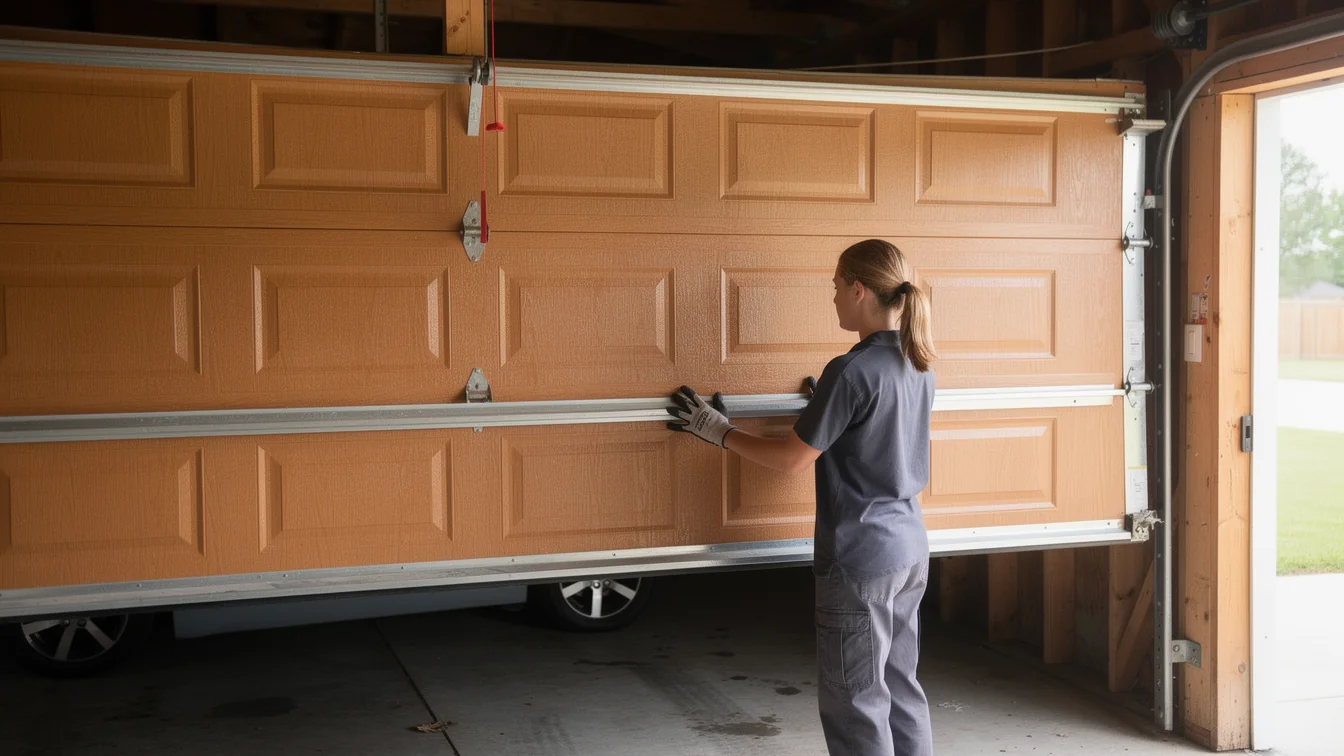
Farmington Hills sits in a climate band the federal data marks as severe cold, and that matters more than most owners think. Steel torsion springs lose tension faster when they cycle through deep freeze and spring thaw every year, and the grease in an old roller track turns stiff below a certain point, which is exactly what happens in a garage that isn't heated. On a house built anywhere from 1938 up through the early 1990s - which covers most of the stock in this area, with a median build year around 1960 - the original hardware was never spec'd for the number of freeze-thaw cycles it's now seen. We find brittle cables and pitted bearings on doors that look fine from the driveway. The first thing a technician does here isn't open the panel - it's check how the spring is holding tension cold, because a spring that looks fine at 2pm in July can bind at 6am in January. That's the order of operations this climate forces on us, and it's not optional.
Leaving It Alone
Here's the honest limit: if a torsion spring is original to a house built in the 1960s or 70s, we don't recommend trying to get another season out of it. Steel fatigues on a curve, not a cliff, and once a spring from that era starts showing rust at the coil or an uneven gap when the door's down, replacing it is cheaper than the service call after it snaps under tension. We also won't tell you to oil a track that's already warped - lubricant doesn't fix bent rail, it just hides the noise for a week. What we will say is that a lot of these older openers and springs have already outlasted their rated cycle count given this area's winters, and leaving well enough alone only works until the first hard cold snap exposes what's been wearing quietly all year.
The Situation
Across the area, the housing stock runs heavily 1960s and 70s construction spread over roughly 41 named neighborhoods, which means a technician walking up to a garage here is usually looking at one of a handful of original setups rather than something custom. First check is spring tension and coil condition - rust pattern tells us the age even when the owner doesn't know it. Second is the track mount, because houses from this build era often used lighter gauge rail that's had five or six decades of seasonal expansion and contraction. Third is the cable and roller set, since nylon rollers from that period get brittle in sustained cold rather than just squeaky. With median household income in the area at $78,727, most owners here choose full spring and hardware replacement over a patch job once we show them the wear - it's the math that makes sense for a door that's going to sit through another twenty winters.
Where People Go Wrong
The most common mistake we see is treating a noisy door as an opener problem when it's a track problem. Owners replace the opener motor, the noise goes away for a month, and then it's back - because the real issue was a rail that's gone slightly out of plumb from decades of seasonal movement, which is common in houses built before the 1990s. The second mistake is ignoring a slow-closing door until it stops closing at all; by then the spring has usually lost enough tension that the cable is doing work it wasn't built for, and that's a cable-snap risk, not just an inconvenience. With roughly 150,321 owner-occupied houses across this service area, a lot of garages share the same age and the same failure pattern, and the fix is almost always cheaper before the cold snap than after it.
Frequently asked questions
Why does my garage door get stiff in the winter?
In this climate band, steel torsion springs and old roller tracks stiffen up below freezing - the spring's steel contracts and grease in the track thickens, so the door feels heavier or sticks. On a house from the 1960s or 70s original hardware era, that stiffness is often a sign the spring is already near the end of its life, not just seasonal.
How do I know if my spring is original to the house?
If your home was built in the common local range of 1960 to the early 1990s and the spring has never been replaced, check for rust along the coil or an uneven gap when the door's fully down. Those are signs of age-related fatigue that's accelerated by repeated hard-freeze winters.
Is it worth repairing an old track instead of replacing it?
Depends on whether the rail is just dirty or actually bent. Lubricant fixes noise from grime; it does nothing for rail that's warped from decades of seasonal expansion, which is common in older local housing stock. If the track's out of plumb, replacement is the honest answer, not another round of oil.
Related garage door services in Farmington Hills
More garage door guides
Book garage door service in Farmington Hills
Call now or request a quote - tell us what the door is doing and where you are.