Farmington Hills, MI · Garage Door Service
Garage Door Repair for Farmington Hills Homes
Torsion spring and opener repair for Farmington Hills homes built 1938-1991, where cold winters and original 1960s hardware wear out the same way, job after job.
- Repairs & new doors
- Springs & openers
- Serving 5 nearby communities
What You Are Seeing
If your door won't budge, or it opens a few inches and stalls, you're almost always looking at a broken torsion spring. On a house in this area, that spring is doing a lot of work - most of the housing stock here went up between 1938 and 1991, with the median build year sitting around 1960, and a big share of that is 1960s-70s construction spread across the dozens of subdivisions that make up this part of Oakland County. A spring built for a door that age has usually already been replaced once, maybe twice, by the time we get the call.
Other common calls: a cable that's frayed and jumped the drum, a bottom roller that's seized and started tearing the track loose from the jamb, or an opener that runs the motor but doesn't move the door - usually a stripped gear inside the unit, not the motor itself. If the door reverses right after it touches the floor, that's the close-limit or the safety sensors, not the spring.
We don't guess from a phone description. We look at the door, tell you what's actually broken, and tell you straight if it's a $40 part or a job that's not worth doing on an old door versus just replacing the section.
Booking a Visit
Call or use the contact link on the site and tell us what the door is doing - stuck, loud, off track, opener running but door not moving. That's enough for us to bring the right spring size and the right roller and cable stock for a door built in the 1960-1991 window, which covers most of what we see out here.
We ask for the house's general age if you know it, because torsion spring wind and drum size changed more than once over those decades, and older doors sometimes have hardware nobody stocks on the truck as a default - we may need to call ahead or order it. Telling us up front saves a second trip.
We don't do emergency dispatch windows or guaranteed same-day slots - we're straightforward about that rather than promising something we can't back up. If the door is stuck open and the house isn't secure, say so when you call and we'll work it into the day.
What the Repair Takes
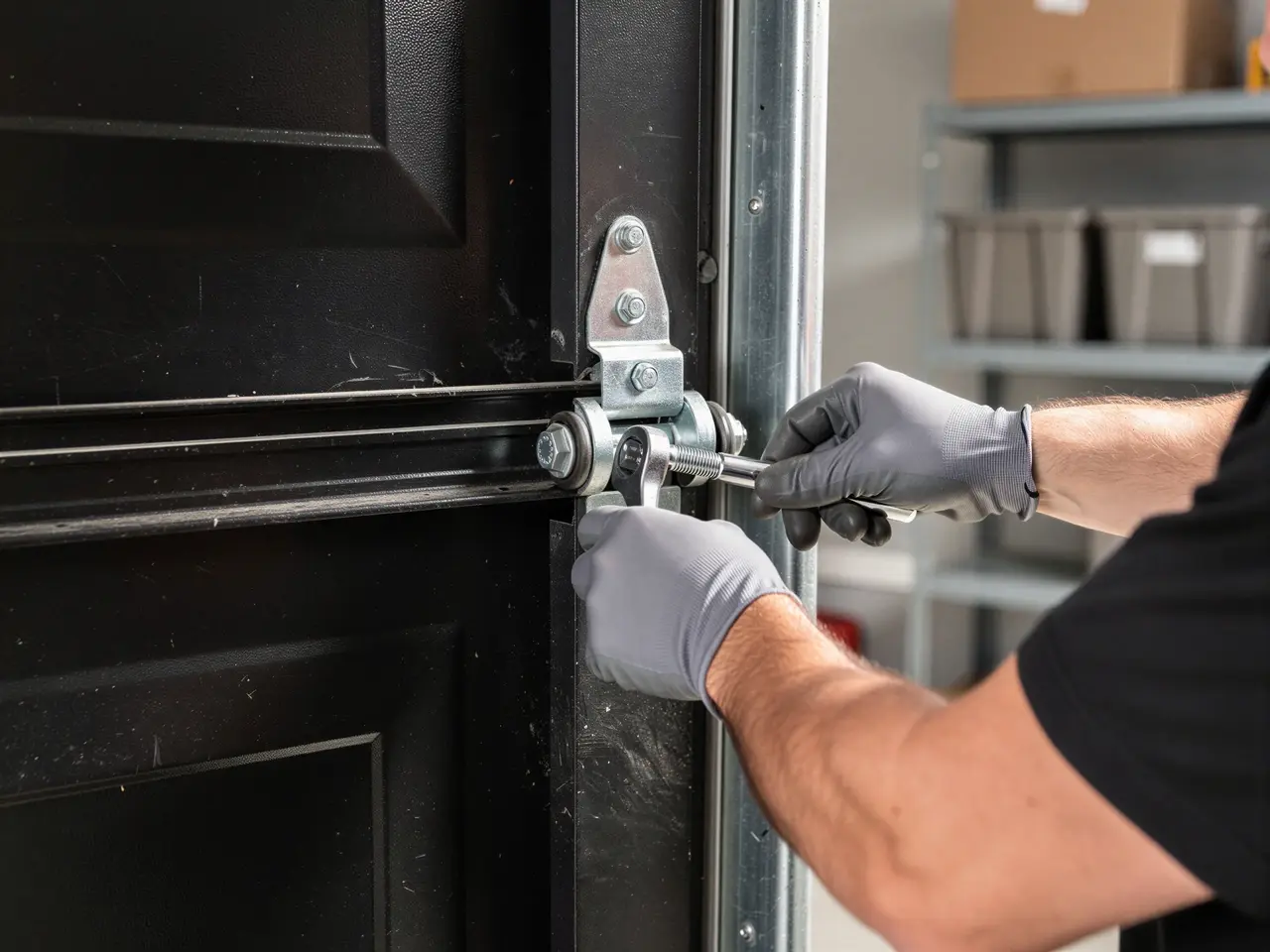
A torsion spring swap on a standard double door is most of a morning's worth of labor once we're on site: unwind the old spring under control, pull the shaft, match the new spring to the door weight and drum size, rewind it to the right number of turns, and balance the door so it holds at waist height on its own. Balance is the part that gets skipped by anyone rushing, and it's the reason a door feels heavy again six months later.
Cable and roller work is faster, usually under an hour unless the track's been bent from a roller binding - bent track has to be straightened or swapped, not just bolted back.
Opener repairs vary more. A stripped gear kit is a known fix. A control board that's taken a power surge - common after the kind of winter storm cycling this area gets - sometimes means the opener itself isn't worth saving, especially on a unit already a couple decades old. We'll tell you the age math rather than sell you a board swap on a motor near the end of its life.
Why It Happens Here
This area sits in a cold, severe climate band, and that matters more to a garage door than people expect. Steel contracts in the cold, torsion springs lose a little tension every winter cycle, and a spring that's been flexing through forty-plus winters on a house from the 1960 median build year is simply closer to its failure point than a spring on new construction. That's why we see so many breaks in the coldest stretches, not because cold snaps a spring outright, but because it's the last cycle on a part that was already near the end.
The housing stock itself plays into it too - with most homes here built in that 1938-1991 range, and a large share in the 1960s-70s wave, a lot of doors are original or on their second hardware set, often sized for specs that have since changed. We're not swapping in a die on a line from a chain; we're matching springs and drums to whatever generation of door is actually hanging in the opening, which is most of the real work on an older door in this area.
Frequently asked questions
Why did my spring break in winter and not before?
Cold doesn't snap a spring by itself, but metal fatigue adds up faster when steel contracts in low temperatures. A spring that's already near the end of its life, which is common on houses from the 1960s-70s wave common in this area, tends to go during a hard cold stretch rather than a mild one.
Is my opener too old to fix?
Depends what's wrong. A stripped gear is a cheap, normal fix on almost any age unit. A fried control board on an opener that's already a couple decades old, which happens after rough winter power cycling, is often not worth sinking money into. We'll tell you the honest math when we're there.
Do you carry parts for older torsion setups?
We stock what fits the common 1960-1991 drum and spring sizes we see most around here. Some original hardware on the oldest end of that range isn't something we carry as standard, and we may need to order it - we'll tell you that on the call, not after we've already driven out.
By Neighborhood
Garage Door Repair across the Farmington Hills area
We also handle garage door repair in these Farmington Hills-area suburbs.
Book garage door service in Farmington Hills
Call now or request a quote - tell us what the door is doing and where you are.