
Farmington Hills, MI · Garage Door Service
Why 1960s and 70s Garage Doors Need Different Care Here
Most Farmington Hills houses date to the 1960s, before garage doors carried insulation standards. Here's what that means for your door in a severe cold climate.
- Repairs & new doors
- Springs & openers
- Serving 5 nearby communities
What the Weather Here Does to It
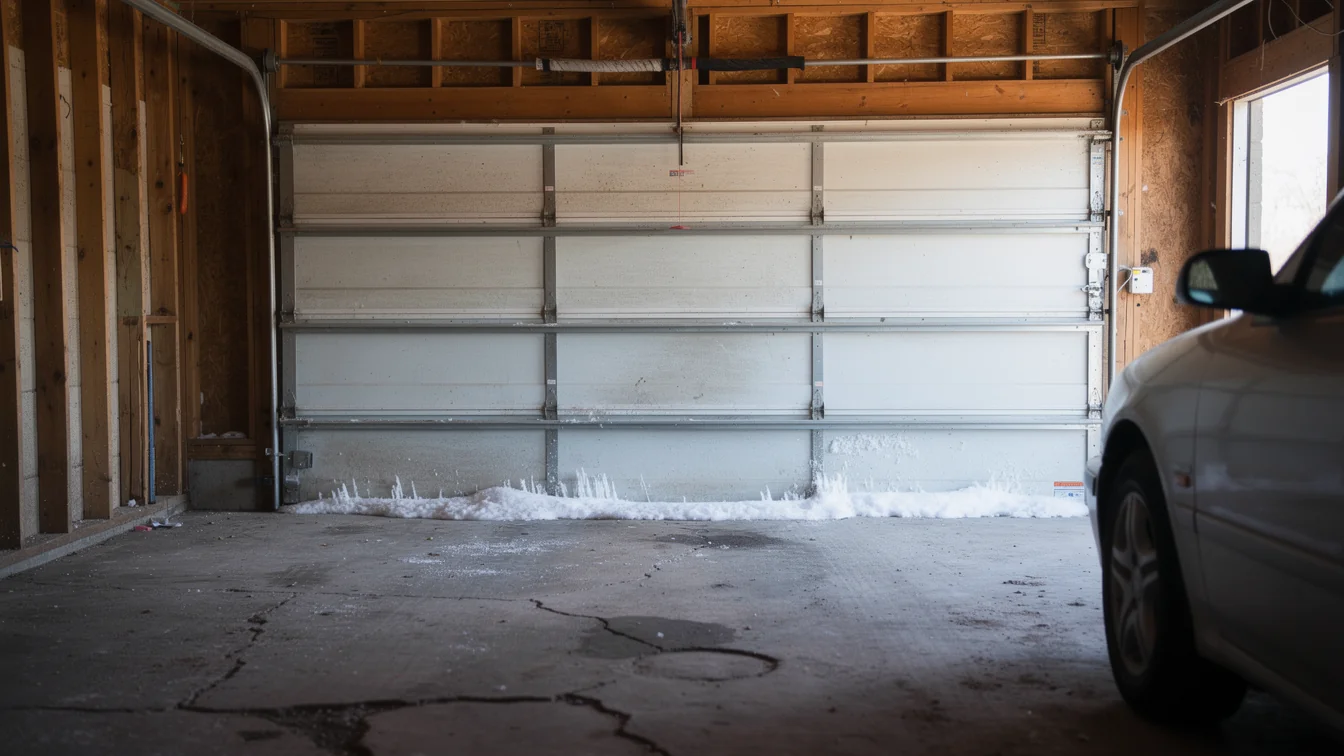
Houses in this service area were mostly built between 1938 and 1991, with the median landing around 1960. That matters because garage doors from that era went up before insulation standards existed for them. A single layer of steel, maybe with a thin fiberboard backer if you're lucky, was standard. This area sits in a cold climate band rated severe, which means the swings aren't gentle - a door skin that's 20 degrees on one side and near freezing on the other all winter long. Steel contracts, the seams where panels meet start working against each other, and the hardware holding it all together ages faster than it would somewhere milder. You'll see it first at the bottom panel, where it meets the slab: warping, a bow that wasn't there five years ago, weatherstripping that's gone stiff and cracked instead of flexible. None of this is a manufacturing defect. It's a door doing exactly what an uninsulated 1960s panel does in a climate like this, for exactly as long as it's been doing it.
Leaving It Alone
An uninsulated door that still opens and closes doesn't feel urgent, so a lot of owners leave it. The problem is what happens behind the panel you can't see easily. Condensation forms on the inside face of a cold steel door when the garage is even a little warmer than the outside air - common if there's a water heater or dryer vent in there. That moisture runs down, sits at the bottom track, and starts rust that you won't notice until the track binds or a roller seizes. Meanwhile the opener is working harder to pull a door that's heavier than it should be because it's slightly warped, and that shortens the life of the drive gear. None of this fails all at once. It's a slow accumulation of small strain, and by the time the door is visibly off-track or the opener is grinding, you're often looking at a bigger repair than if the weatherstripping and bottom seal had been addressed two winters earlier.
The Situation
This isn't a one-off issue tied to a single house. The housing stock across the 41 named areas this company works in skews the same way - mostly 1960s and 70s construction, with the overall range running 1938 to 1991. That means a large share of the original garage doors still in service were installed before insulation was ever part of the spec sheet, back when a garage door was just a steel barrier, not a thermal one. If your house falls in that build window, there's a reasonable chance your door is original or close to it, especially if nobody's mentioned replacing it. With roughly 150,321 owner-occupied houses across the broader area and a median household income of $78,727, a lot of owners are weighing a full replacement against patching an old door, and that's a real decision, not a marketing line. The honest answer depends on the door's age and condition, not a rule of thumb that applies to every garage in town the same way.
Where People Go Wrong
The most common mistake is buying a peel-and-stick insulation kit and calling it solved. It helps a little with noise, but it doesn't fix a warped panel, a dead bottom seal, or a track that's already rusting from condensation - and on an old door, those are usually the real problems. The second mistake is replacing the opener and assuming that fixes the door's sluggishness, when the opener was never the issue; it was compensating for a heavier, warped panel. We won't sell you a new opener to mask a door problem, and we won't tell you a 1960s door needs full replacement if the frame and hardware are sound and it just needs new seals and a spring adjustment. Where we draw a line: once a panel is bowed enough that it's binding on the track, patching it is a short-term fix, not a real one, and we'll say so instead of charging you twice.
Frequently asked questions
Is my garage door original to the house if it was built in the 1960s?
It's common but not guaranteed. A lot of houses in this build era still have their original steel door, especially if nobody's mentioned a replacement. The giveaways are a lack of any insulation backing, stiff or cracked weatherstripping, and hardware that looks like it hasn't been swapped in decades.
Will adding an insulation kit fix the warping on my old door?
No. A foam insulation kit cuts down on noise and can help slightly with temperature, but it does nothing for a panel that's already bowed from years of cold-climate contraction. If the door is warped or binding on the track, insulation is a cosmetic fix on top of a mechanical problem.
How do I know if condensation is damaging my door?
Check the bottom track and the lowest panel seam for rust streaks or flaking paint. That's usually where condensation collects first on an uninsulated steel door. If the track is rusted enough to catch the roller, that's past the point of just wiping it down.
Related garage door services in Farmington Hills
More garage door guides
Book garage door service in Farmington Hills
Call now or request a quote - tell us what the door is doing and where you are.