Farmington Hills, MI · Garage Door Service
Garage Door Roller Replacement for Dearborn Heights Homes
Dearborn Heights homes built around 1958 still run original steel rollers on sealed bearings. We travel 11 miles from Farmington Hills to swap them before they seize a track.
- Repairs & new doors
- Springs & openers
- Serving 5 nearby communities
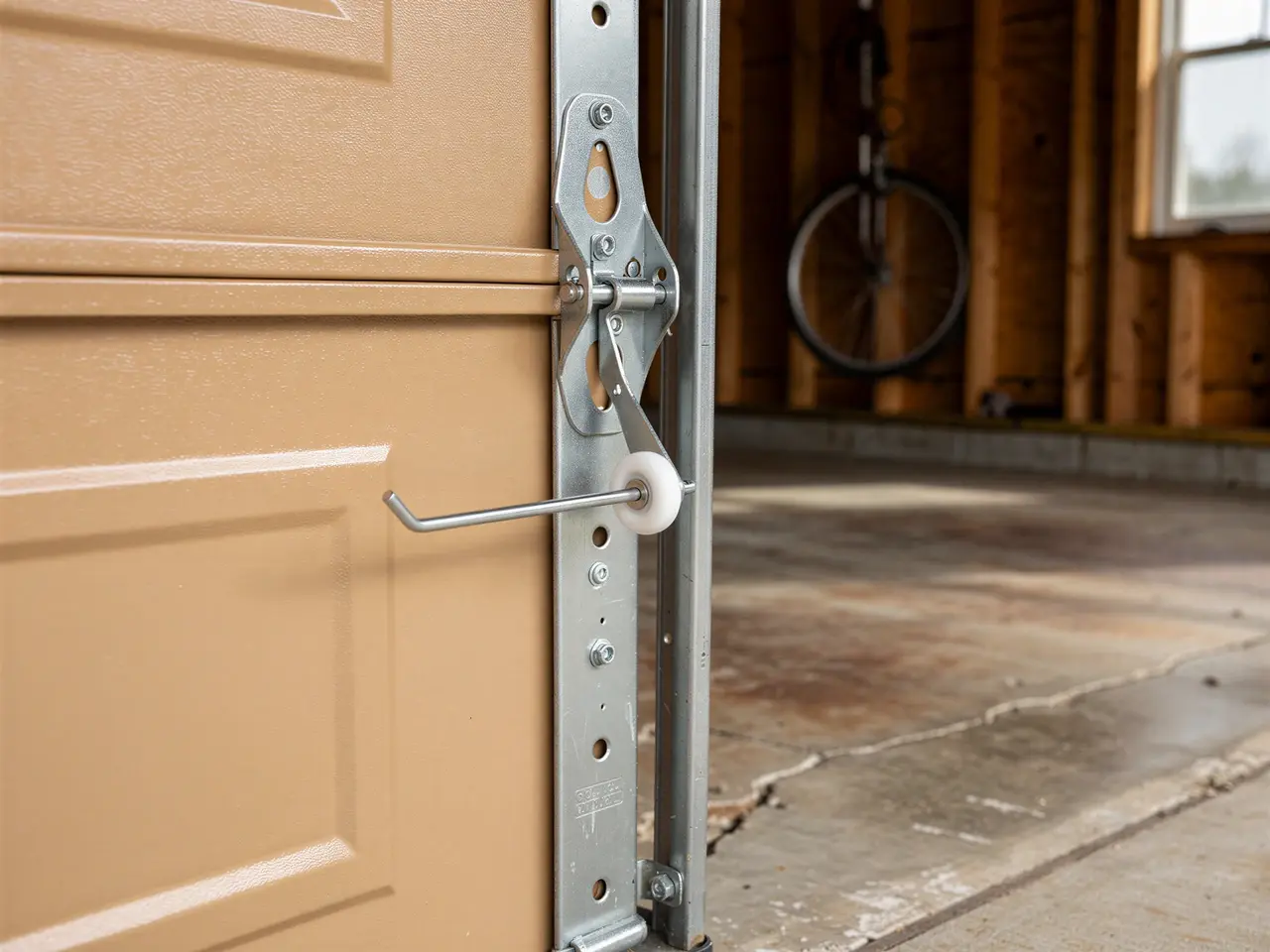
What You Are Seeing
Most houses in Dearborn Heights went up around 1958, and on a lot of those garages, the rollers still bolted to the bottom bracket are the same ones the builder put in. Nobody thinks about a roller until it's grinding, hopping in the track, or has worn down enough that the door sags on one side when it's halfway open. If your opener strains harder than it used to, or you hear a rhythmic clunk every few feet of travel, that's usually a flat spot on a steel roller wearing against the track rail, not the opener itself. Steel rollers from that era ran on sealed bearings that were never meant to be lubricated again after installation, and sixty-plus years is a long run for any bearing. The stem can also be bent from years of the door racking slightly in the track, which throws the whole panel out of alignment even after you swap the worn wheel. We come out from Farmington Hills, about 11 miles away, to look at the actual wear pattern on your rollers and track before we recommend anything - sometimes it's just the rollers, sometimes the track needs straightening too.
Why It Happens Here
A roller's enemy is friction and cold, and Dearborn Heights gets both. The service area sits in a severe cold climate band, and steel contracts in winter just enough to tighten tolerances between the roller and the track rail. On a roller that's already worn, that tighter fit turns a quiet door into a noisy one the first hard freeze of the season. Houses built in 1958 typically used steel wheels on steel track, with no nylon or rubber tire to absorb the shock of cold metal on cold metal - every bump in the track transmits straight into the bracket and the opener. With roughly 21,986 households in this part of the service area and a median household income of $61,035, we see a lot of these original builds still carrying their first set of rollers decades past when a homeowner in a newer subdivision would have replaced theirs. The fix isn't exotic. It's recognizing that a 1958 track profile and a 1958 roller were matched to each other, and a mismatched replacement roller can bind just as badly as the worn one did.
How Long It Takes
A straight roller swap on a residential door, where the track itself is still true, is a short job - we're loosening retainer brackets, sliding out the old wheel, and setting the new one, roller by roller, down both sides of the door. Where it runs longer is when a track has been bent by one of those original rollers binding for years before anyone noticed; straightening or replacing a section of track adds time because we have to re-square the door before it moves freely again. We won't know which situation yours is until we're standing in front of it, which is part of why we don't quote a flat number before we've seen the wear on your specific track. One honest limit: if the bottom brackets or the track itself have rusted through, roller replacement alone won't fix the noise, and we'll tell you that instead of bolting new wheels onto a bracket that won't hold them.
Stocked Parts
We carry nylon rollers with sealed ball bearings as the standard upgrade over the original steel wheels on these older Dearborn Heights builds - they run quieter and don't transmit cold-weather vibration into the track the way steel-on-steel does. We also stock the common stem lengths and bracket sizes that match the track profiles still in use on houses from the late 1950s through the 1970s, since that's the bulk of what this part of the service area is built on. What we don't stock on the truck is anything custom - a non-standard track width or a door with a roller size nobody's made in decades. If your door falls into that category, we'll order the part rather than force a wrong-size roller into a track it doesn't fit.
Frequently asked questions
Are the rollers on my door original to the house?
If your Dearborn Heights home was built close to 1958 and nobody's mentioned a garage door service before, there's a good chance the rollers are original steel wheels on sealed bearings. Sixty-plus years of use, especially through severe cold winters, is well past the normal life of that hardware, so worn or flat-spotted rollers are common on these builds.
Why does the door get noisier in winter?
Steel rollers on steel track tighten up slightly as the metal contracts in cold weather, which makes any existing wear more noticeable. In a severe cold climate like this service area's, that means a roller that was just a little worn in summer can sound a lot worse the first hard freeze of the season.
Do you have a shop in Dearborn Heights?
No. We're based in Farmington Hills, about 11 miles from Dearborn Heights, and we travel out for roller replacement and other garage door jobs rather than running a branch location here.
Will new rollers fix a door that sags on one side?
Sometimes. If the sag comes from a worn roller letting the bracket drop, new rollers usually correct it. If the track itself has bent from years of a roller binding, you need the track straightened or replaced along with the rollers, and we won't know which applies until we've looked at your door.
More garage door services in Dearborn Heights
- Garage Door Cable Repair in Dearborn Heights
- Garage Door Repair in Dearborn Heights
- Garage Door Service in Dearborn Heights
- Garage Door Maintenance in Dearborn Heights
- New Garage Door Installation in Dearborn Heights
- Off-Track Garage Door Repair in Dearborn Heights
- Garage Door Opener Installation in Dearborn Heights
Book garage door service in Farmington Hills
Call now or request a quote - tell us what the door is doing and where you are.